Minimally Invasive Skull Base Surgery: Expert Care for Brain Tumors

- What Is Minimally Invasive Skull Base Surgery?
- Who Is a Candidate for Minimally Invasive Skull Base Surgery?
- What Conditions Can Be Treated With Skull Base Surgery?
- Common Skull Base Tumors and Lesions
- How Is Minimally Invasive Skull Base Surgery Performed?
- Advanced Technologies
- Benefits of Minimally Invasive Skull Base Surgery
- Risks and Potential Complications
- Recovery After Skull Base Surgery
- Why Choose Dr. Aaron Cohen-Gadol for Skull Base Surgery?
- Frequently Asked Questions
- Key Takeaways
- Getting There
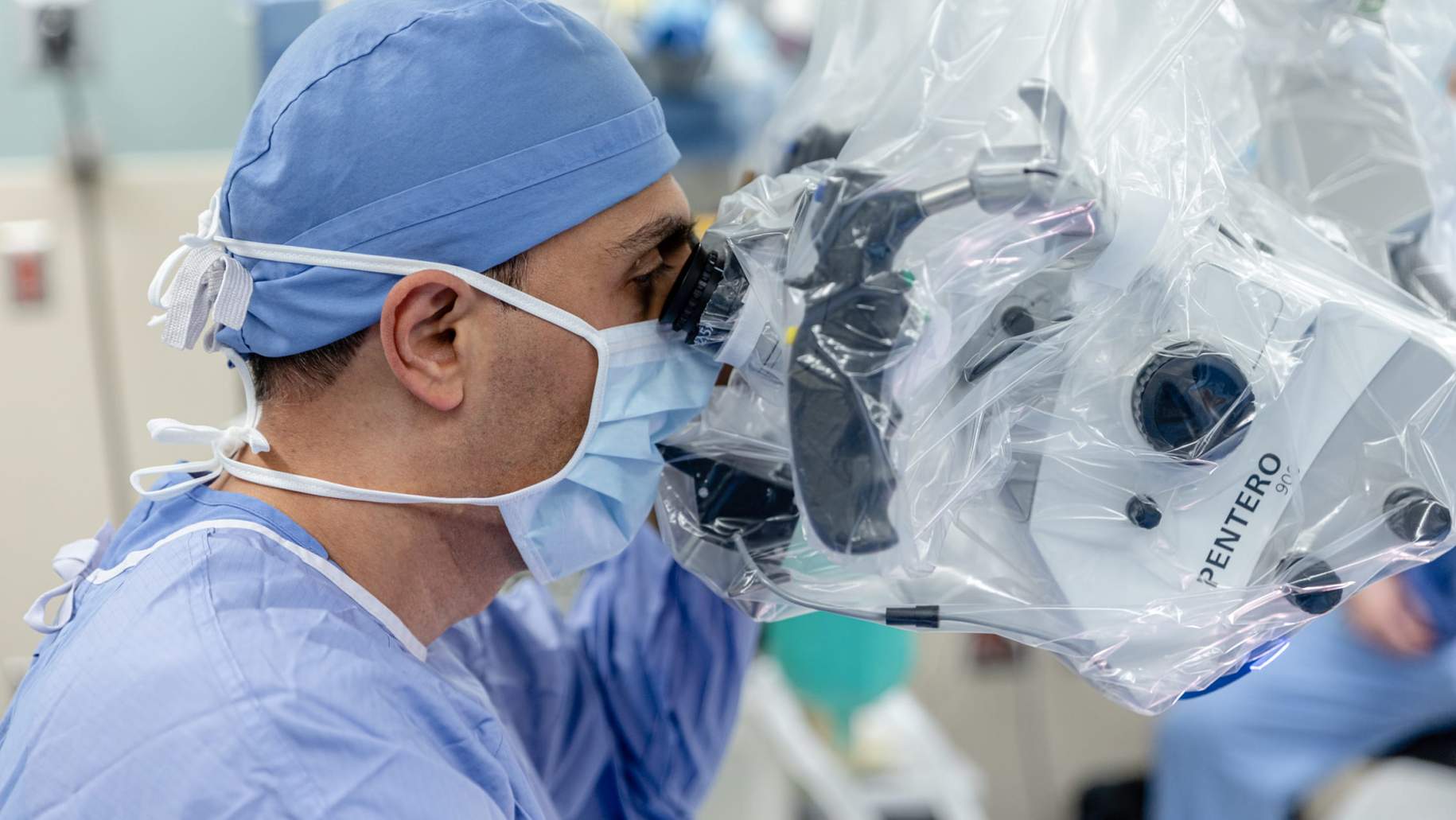
Minimally invasive skull base surgery has transformed the way complex brain and skull base tumors are treated. Traditionally, tumors located at the base of the skull required large incisions and significant manipulation of brain tissue. Today, advanced surgical technologies and specialized techniques enable surgeons to access these difficult areas through small natural pathways, which significantly reduces trauma to surrounding structures.
For patients facing a skull base tumor or lesion, understanding how minimally invasive skull base surgery works can help them make informed decisions about their care. This guide explains the procedure, who could benefit from it, what conditions it treats, and what to expect before and after surgery.
What Is Minimally Invasive Skull Base Surgery?
Minimally invasive skull base surgery refers to advanced surgical techniques used to treat tumors and abnormalities located at the base of the skull, the complex area that separates the brain from the eyes, nose, sinuses, and spinal cord.
The skull base contains many critical structures, including the following:
- Major blood vessels
- Cranial nerves that control vision, facial movements, and swallowing
- The brainstem
- The pituitary gland
Because of this dense anatomy, performing surgery in this region requires exceptional precision.
Rather than performing a large craniotomy (opening the skull widely), surgeons performing minimally invasive skull base surgery typically use specialized instruments and endoscopes inserted through a small opening or natural pathway, such as the nasal passages. Endoscopes are thin tubes equipped with high-definition cameras and lights, which enable surgeons to visualize deep structures with remarkable clarity.
Some common minimally invasive techniques include the following:
- Endoscopic endonasal surgery (through the nose)
- Keyhole craniotomy, which uses a small skull opening
- Microscopic skull base surgery
These methods allow surgeons to reach tumors while minimizing disruption to surrounding brain tissue.
With minimally invasive skull base surgery, surgeons can remove tumors, repair abnormalities, and treat neurological conditions while preserving critical nerves and blood vessels. This modern approach provides patients with safer treatment options, shorter recovery times, and improved outcomes compared with traditional open procedures.
Who Is a Candidate for Minimally Invasive Skull Base Surgery?
Not every patient with a skull base condition requires surgery, and not every case is suitable for a minimally invasive approach. Determining who is a candidate for minimally invasive skull base surgery depends on several factors.
Doctors typically consider the following factors:
- Tumor type: Some tumors are particularly well-suited for minimally invasive techniques. For example, many pituitary tumors can be removed through the nose without opening the skull.
- Tumor size and location: Small- to medium-sized tumors located along an accessible skull base corridor can be ideal candidates. Larger tumors might still be treated using a minimally invasive method, but sometimes a hybrid approach is required.
- Patient health: A patient’s overall health plays an important role in surgical planning. Minimally invasive approaches are often preferred for patients who might not tolerate a more extensive procedure.
- Symptoms and disease progression: Surgery could be recommended if a tumor is causing symptoms such as vision problems, hormonal imbalance, headaches, hearing loss, difficulty swallowing, and/or facial numbness.
Each patient is evaluated individually by a specialized neurosurgical team to determine whether minimally invasive skull base surgery is their best option.
Why should you have your surgery with Dr. Cohen?
Dr. Cohen
- 7,500+ specialized surgeries performed by your chosen surgeon
- More personalized care
- Extensive experience = higher success rate and quicker recovery times
Major Health Centers
- No control over choosing the surgeon caring for you
- One-size-fits-all care
- Less specialization
For more reasons, please click here.
What Conditions Can Be Treated With Skull Base Surgery?
Minimally invasive skull base surgery can treat a wide range of neurological and structural conditions located near the base of the brain, such as the following:
- Brain tumors
- Pituitary tumors
- Skull base meningiomas
- Acoustic neuromas
- Craniopharyngiomas
- Chordomas
- Cerebrospinal fluid leaks
- Vascular abnormalities
- Congenital defects
Some conditions might also require collaboration between a neurosurgeon, ear, nose, and throat (ENT) surgeon, endocrinologist, and radiation specialist. This multidisciplinary approach ensures that patients receive the most appropriate treatment plan for their specific condition.
Common Skull Base Tumors and Lesions
Several types of tumors and lesions can develop in the skull base region, and many of them can be treated effectively using minimally invasive skull base surgery.
- Pituitary adenomas: Pituitary adenomas are benign tumors of the pituitary gland. They can affect hormone production and cause vision problems by pressing on the optic nerves. These tumors are commonly removed using an endoscopic approach through the nose.
- Meningiomas: Meningiomas arise from the membranes covering the brain and spinal cord. When they occur near the skull base, they can compress nerves and brain structures.
- Acoustic neuromas (vestibular schwannomas): These tumors develop on the nerve responsible for hearing and balance. Surgical removal can help preserve hearing and relieve pressure on nearby nerves.
- Craniopharyngiomas: Craniopharyngiomas are rare tumors that develop near the pituitary gland and hypothalamus. Minimally invasive approaches often provide access without extensive brain retraction.
- Chordomas and chondrosarcomas: These rare tumors originate in bone at the base of the skull and can be difficult to treat because of their location. Advanced skull base techniques enable surgeons to safely remove as much of the tumor as possible.
How Is Minimally Invasive Skull Base Surgery Performed?
The exact steps of minimally invasive skull base surgery depend on the tumor’s location and type, but most procedures follow a similar general process.
Preoperative Planning
Before surgery, patients will undergo detailed studies such as:
- Magnetic resonance imaging (MRI)
- A computed tomography (CT) scan
- Endocrine testing (for pituitary tumors)
These procedures help surgeons map the safest pathway to the tumor.
Surgical Procedure
During minimally invasive skull base surgery, surgeons will do the following:
- Insert an endoscope through the nasal passages or a small incision
- Use high-definition imaging to navigate toward the tumor
- Carefully remove the tumor using specialized microinstruments
- Protect critical nerves and blood vessels throughout the procedure
If necessary, the surgeon will reconstruct the skull base using tissue grafts to prevent cerebrospinal fluid leaks.
Advanced Technologies
Modern skull base surgery often involves the following technologies:
- Image-guided navigation systems
- Intraoperative MRI
- High-definition endoscopy
- Microsurgical tools
These technologies enhance precision and safety.
Benefits of Minimally Invasive Skull Base Surgery
Compared with traditional open brain surgery, minimally invasive skull base surgery offers several important advantages.
- Smaller incisions: Procedures are performed through a natural opening or very small surgical corridor.
- Less brain manipulation: Surgeons can reach tumors without retracting (pulling back) large portions of brain tissue.
- Reduced pain and scarring: Smaller incisions generally result in less postoperative discomfort and minimal visible scarring.
- Faster recovery: Many patients recover more quickly than with traditional craniotomy procedures.
- Shorter hospital stay: Some patients are discharged within a few days, depending on the surgery’s complexity.
- Improved visualization: High-definition endoscopic cameras provide the surgeon with detailed views of deep structures.
Because of these benefits, minimally invasive skull base surgery has become the preferred treatment approach for many skull base conditions.
Risks and Potential Complications
Although minimally invasive skull base surgery is generally safe when performed by an experienced surgeon, all surgical procedures carry some risk.
Potential complications can include the following:
- Infection
- Bleeding
- Cerebrospinal fluid leakage
- Hormonal imbalance
- Vision changes
- Nerve injury
- Stroke (rare)
Because the skull base region is so complex, careful surgical planning is essential for minimizing these risks. Choosing an experienced skull base surgeon significantly reduces the likelihood of complications.
Recovery After Skull Base Surgery
Recovery after minimally invasive skull base surgery varies depending on the type of tumor treated and the extent of surgery required.
Hospital Stay
Many patients stay in the hospital for 2–5 days after surgery, but a longer stay might be needed after a more complex procedure. During this time, doctors monitor neurological function, hormone levels, and healing.
Early Recovery
Common temporary symptoms after surgery could include the following:
- Nasal congestion
- Mild headaches
- Fatigue
- Temporary hormone fluctuations
Patients are usually advised to avoid heavy lifting, bending, and strenuous activity during the early recovery phase.
Long-Term Recovery
Most patients gradually return to normal activities within several weeks.
Follow-up care might include the following tests:
- MRI scan to monitor for recurrence
- Endocrine evaluation
- Vision testing
For many people, minimally invasive skull base surgery allows a quicker return to work and regular daily life than do traditional open procedures.
Why Choose Dr. Aaron Cohen-Gadol for Skull Base Surgery?
When considering minimally invasive skull base surgery, selecting a highly experienced neurosurgeon is one of the most important decisions a patient can make.
Dr. Cohen-Gadol is an internationally recognized neurosurgeon who specializes in complex brain and skull base tumors. His expertise includes advanced microsurgical and endoscopic techniques designed to treat tumors while preserving neurological function.
Patients benefit from his:
- Extensive experience with complex brain tumors
- Use of advanced minimally invasive surgical techniques
- Personalized treatment plans
- Collaboration with multidisciplinary specialists
Dr. Cohen-Gadol is also dedicated to patient education, helping people understand their diagnosis and treatment options so that they can make confident decisions about their care.
Frequently Asked Questions
How long is the recovery after skull base surgery?
Recovery after skull base surgery varies depending on the procedure and the patient’s overall health. Many patients who undergo minimally invasive skull base surgery spend a few days in the hospital and return to normal daily activities within 4 to 6 weeks. Complete healing could take several months, particularly if the surgery involved complex tumor removal or reconstruction.
How risky is pituitary adenoma surgery?
Pituitary adenoma surgery is generally considered safe when performed by an experienced surgeon using minimally invasive techniques. The endoscopic endonasal approach allows surgeons to access the tumor through the nasal passages, thereby avoiding a large incision. Although risks such as hormone imbalance, cerebrospinal fluid leakage, or infection can occur, complications are relatively uncommon if the surgery is performed at a specialized skull base center.
What type of condition would require surgery of the skull base?
Skull base surgery may be necessary for several conditions, including tumors, cysts, vascular abnormalities, and cerebrospinal fluid leaks. Common examples include pituitary adenomas, meningiomas, acoustic neuromas, craniopharyngiomas, and chordomas. Minimally invasive skull base surgery is often used to treat these conditions while minimizing disruption to surrounding brain structures.
How serious is a skull base tumor?
A skull base tumor can range from benign to malignant, but even noncancerous tumors can cause serious symptoms because they grow near vital nerves and blood vessels. These tumors can affect vision, hearing, hormone production, and brain function. However, advances in minimally invasive skull base surgery have made it possible to treat many skull base tumors safely while preserving critical neurological function.
What are the advantages of minimally invasive surgery?
Minimally invasive surgery advantages involve smaller incisions and faster recovery than open surgery.
Why can't you drive after brain surgery?
You cannot drive immediately after brain surgery to prevent accidents caused by potential postoperative complications like seizures, cognitive impairment, visual disturbances, or slowed reaction times. A standard waiting period applies to allow the brain to heal.
How serious is a skull base tumor?
Skull base tumors are inherently serious because they form at the bottom of the skull, an extremely delicate region packed with critical nerves, blood vessels, and the brainstem. While most are non-cancerous (benign), their strategic location makes even small growths capable of causing severe neurological or structural damage.
Key Takeaways
Minimally invasive skull base surgery represents a major advancement in neurosurgical care. By combining cutting-edge technology with refined surgical techniques, specialists can treat complex tumors located at the base of the brain with greater precision and safety than ever before. For many patients, minimally invasive skull base surgery offers an effective path toward tumor removal and symptom relief and a faster return to normal life.
Getting There
The clinic is located at Cedars Towers East which is at 8631 W 3rd Street, Suite 815E, Los Angeles, CA 90048, near Beverly Grove. It’s easily accessible from San Vicente Boulevard or La Cienega Boulevard. Paid parking is available in the adjacent structure and limited street parking can be found nearby. For navigation, entering “8631 W 3rd St” into the GPS will direct you to the main entrance.
The entrance to the Cedars Towers East parking garage is on Sherbourne Drive, located just north of 3rd Street. It is a self-parking garage with the address 217 S Sherbourne Dr, Los Angeles, CA. The entrance is on the right if you are traveling south on Sherbourne, or on the left if you are traveling north on Sherbourne. You then need to take the parking elevators to the plaza level and then cross the short bridge to use the East elevators to reach the 8th floor (suite 815.) Allow extra time for traffic and parking, especially during weekday mornings.