Symptoms of Cushing's Disease

- What Triggers Cushing's Disease?
- What Are the Symptoms of Cushing’s Disease?
- What Are the Symptoms of Cushing's Disease in Females Vs. Males?
- What Is Mild Cushing’s Syndrome?
- What Are the Advanced Symptoms of Cushing’s Disease?
- How Do You Know If You Have Cushing’s Disease?
- Can You Be Skinny with Cushing’s Disease?
- Symptoms That May Require Prompt Medical Evaluation
- Key Takeaways
- FAQs
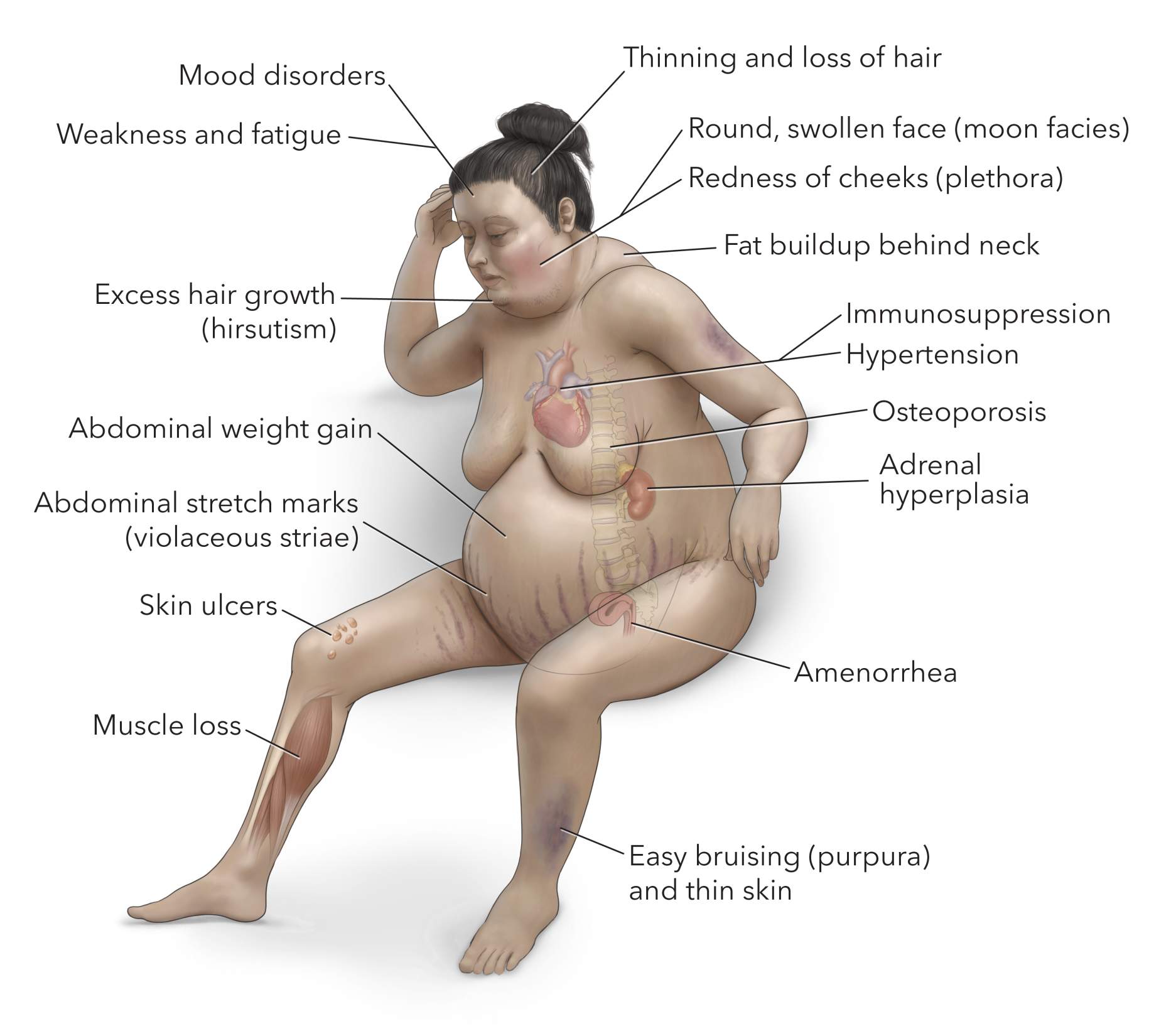
Cushing's disease, also known as hypercortisolism or hyperadrenocorticism, is a rare endocrine disorder caused by a pituitary adenoma (a benign tumor). This tumor triggers an overproduction of ACTH (adrenocorticotropic hormone), which signals the adrenal glands to release excessive cortisol. Known as the "stress hormone," chronic cortisol elevation disrupts the body’s circadian rhythm, blood pressure, and metabolism.
What Triggers Cushing's Disease?
The primary cause of Cushing's disease is usually a benign tumor called a pituitary adenoma located in the pituitary gland.
The adenoma causes the pituitary gland to produce an excessive amount of adrenocorticotropic hormone (ACTH), which, in turn, stimulates the adrenal glands to produce more cortisol than the body needs.
What Are the Symptoms of Cushing’s Disease?
Cushing's disease is a hormonal disorder caused by the body’s prolonged exposure to excess cortisol. Its symptoms primarily involve distinctive physical changes, such as rapid weight gain, upper-body fat redistribution, fragile skin, muscle weakness, and mood disturbances.
The severity of Cushing’s symptoms depends on the pituitary tumor's activity, the duration of cortisol excess, and individual differences in how the body responds to the hormone. Common symptoms include:
Why should you have your surgery with Dr. Cohen?
Dr. Cohen
- 7,500+ specialized surgeries performed by your chosen surgeon
- More personalized care
- Extensive experience = higher success rate and quicker recovery times
Major Health Centers
- No control over choosing the surgeon caring for you
- One-size-fits-all care
- Less specialization
For more reasons, please click here.
Common Physical Indicators
- Moon Face: A round, full-appearing face, accompanied by redness of the cheeks
- Buffalo Hump: Fat accumulation on the back of the neck
- Central Obesity: Abdominal weight gain with purple stretch marks and easy bruising
- Hirsutism: Excess hair growth on the face or body
- Fatigue: Profound weakness and persistent tiredness
Systemic Symptoms
- Metabolic: Type 2 diabetes and elevated blood pressure
- Musculoskeletal: Muscle loss (thinning arms/legs) and osteoporosis
- Psychological: Mood swings, severe anxiety, depression, and brain fog
Symptoms of Large Pituitary Tumors (Macroadenomas)
- Visual disturbances: Loss of peripheral vision known as bitemporal hemianopsia
- Hormonal Imbalance: Compression of the pituitary can decrease thyroid, growth or sex hormones, leading to diminished sexual drive and infertility.
What Are the Symptoms of Cushing's Disease in Females Vs. Males?
While Cushing's disease can present similarly in both females and males, the symptoms of high cortisol levels in males can differ from those in females.
Cushing's syndrome symptoms in women
- Absent menstruation
- Excessive hair growth on the face, chest, or abdomen
Cushing's syndrome symptoms in men
- Erectile dysfunction
- Decreased libido
What Is Mild Cushing’s Syndrome?
Mild Cushing’s syndrome, also known as subclinical Cushing’s syndrome or mild hypercortisolism, is a condition of excessive cortisol secretion, without the specific symptoms of Cushing's disease (i.e., proximal muscle weakness, facial plethora, easy bruising, purple striae).
Mild Cushing’s Symptoms
- Thin Skin
- Acne
- Hirsutism
- Poor wound healing
- Obesity
- Peripheral edema (swelling)
- Facial fullness
- Buffalo hump
Risks of Subclinical Cortisol Excess
- Hypertension
- Bone fragility and increased risk of fractures
- Significant mood alterations and emotional instability
- Alterations in glucose (diabetes risk) and lipid metabolism
What Are the Advanced Symptoms of Cushing’s Disease?
Advanced symptoms of Cushing's disease may occur when the condition remains untreated or undiagnosed for an extended period. When this happens, the multitude of symptoms related to Cushing's disease are most prominent and severe complications can occur.
Complications related to Cushing's disease
- Cardiovascular complications: Hypertension, atherosclerosis, arrhythmia, cardiomyopathy, and increased risk of stroke or heart attack
- Metabolic disturbances: Glucose intolerance, insulin resistance, diabetes, disrupted lipid metabolism, increased risk of cardiovascular disease.
- Osteoporosis and bone fractures: Decreased bone density, bone fragility, and susceptibility to fractures.
- Immunosuppression: Increased susceptibility to infection, recurrent infections, delayed wound healing, and increased risk of secondary infections.
- Psychological and emotional impact: Mood swings, depression, anxiety, irritability, cognitive impairment. These symptoms can significantly impact quality of life and may require psychological support and intervention.
- Musculoskeletal complications: Muscle weakness, wasting, fatigue, reduced physical function and mobility, difficulty performing daily activities, increased risk of falls and injuries.
- Reproductive issues: In women, Cushing's disease can cause menstrual irregularities including absence or infrequent menstruation. In men, it can lead to decreased libido and erectile dysfunction.
Prevention of complications through prompt diagnosis and treatment is critical. Treatment typically involves surgery to remove the underlying pituitary tumor. In some cases, radiation therapy and medications may be used.
How Do You Know If You Have Cushing’s Disease?
Cushing's disease can initially present with subtle symptoms that may not significantly impact how you feel. However, as the disease progresses, you may begin to experience increasing fatigue, anxiety, irritability, and weight gain.
Diagnosing Cushing's disease involves a series of steps, including a review of your medical history, a physical examination, and laboratory tests.
- 24-hour urinary excretion of cortisol: This test measures the amount of cortisol excreted in the urine over a 24-hour period.
- Late-night salivary cortisol: Measuring cortisol levels in saliva at midnight to check if cortisol levels drop at night as they should in a healthy circadian rhythm.
- Low-dose dexamethasone suppression test: Measuring cortisol levels in the morning after giving a low oral dose of synthetic glucocorticoid dexamethasone at night. Cortisol levels should be suppressed in response to dexamethasone.
- High-dose dexamethasone suppression test: This test is used if the low-dose test is abnormal. It helps differentiate between a pituitary adenoma and an ectopic tumor as the source of elevated cortisol.
- Pituitary Magnetic Resonance Imaging (MRI): Detailed brain imaging to check for a pituitary adenoma once other causes of high cortisol are ruled out.
- Inferior Petrosal Sinus Sampling (IPSS): A procedure to determine whether the source of ACTH production is localized to the pituitary gland or originates from elsewhere in the body.
Can You Be Skinny with Cushing’s Disease?
Yes, it is possible to have Cushing's disease and be "skinny" or have a normal body weight. Cushing's disease can affect people differently, especially in the early stages. Some individuals may experience classic signs of Cushing's disease, such as weight gain, a round face, and central obesity, while others may present with less apparent symptoms or even weight loss.
Ready for a specialized evaluation? Request a second opinion from Dr. Cohen-Gadol to explore your treatment options
Symptoms That May Require Prompt Medical Evaluation
- Rapid weight gain with a rounded face
- Progressive muscle weakness
- Purple stretch marks on the abdomen
- Difficult-to-control high blood pressure or diabetes
- Frequent fractures or severe bone pain
- Persistent headaches or changes in vision
Key Takeaways
- Cushing's disease is a rare condition caused by a pituitary adenoma (tumor) that leads to excessive production of cortisol, a hormone produced by the adrenal glands.
- Advanced symptoms of Cushing's disease may occur when the condition remains untreated or undiagnosed.
- Three signs or manifestations of Cushing’s disease include: unexplained weight gain, muscle weakness, and persistent fatigue.
- Diagnostic tests involve measuring cortisol levels in blood, urine, or saliva, along with imaging studies like an MRI.
FAQs
What causes high cortisol levels?
Cortisol levels rise due to three main factors:
Natural Rhythms: Your body peaks cortisol in the morning for wakefulness and lowers it at night for sleep (circadian rhythm).
Acute Stress: The "fight or flight" response temporarily spikes cortisol to manage immediate threats.
Cushing’s Disease: A benign pituitary tumor (adenoma) triggers a constant, excessive release of ACTH, forcing the adrenal glands to overproduce cortisol.
What does it feel like to live with Cushing’s?
Living with Cushing's disease feels like a significant and often overwhelming disruption to both your body and mind. The experience is defined by:
- Debilitating Fatigue: A persistent, heavy tiredness that rest cannot fix, often accompanied by muscle weakness that makes daily tasks difficult.
- Emotional Instability: Frequent mood swings, anxiety, irritability, and depression caused by hormonal shifts.
- Brain Fog: Difficulty concentrating and memory issues that impact daily productivity.
- Fragility: Feeling delicate due to thinning skin that bruises easily and weakened bones that increase the risk of fractures.
Loss of Self: Significant weight gain in the face and torso can lead to feelings of isolation and a sense of losing one's physical identity.
What are the first signs of Cushing's disease?
Too much cortisol can cause some of the main symptoms of Cushing syndrome: a fatty hump between the shoulders, a rounded face, extreme tiredness, and pink or purple stretch marks on the skin.
How long can Cushing's disease go undiagnosed?
People can live with Cushing’s disease for months to several years without knowing. Because it develops very gradually, symptoms like weight gain, fatigue, and mood swings are often initially dismissed as other lifestyle or health issues.
How do you test for Cushing's syndrome?
Testing for Cushing's syndrome involves checking for high cortisol levels using a 24-hour urine test, a late-night saliva test, or a dexamethasone suppression test. Doctors will also review your medical history and use blood tests or scans to find the exact cause of your symptoms.