Best Hospitals for Meningioma 2026–2027: What the Rankings Tell You and What They Don’t

- Best Hospitals for Meningioma and Why They’re Recognized
- Leading Meningioma Hospitals & Notable Neurosurgeons (2026–2027)
- What Hospital Rankings Don’t Tell You—The Hidden Reality
- How to Choose: A Framework for Patients
- Aaron Cohen-Gadol, MD and Complex Meningioma Surgery
- Beyond the Brand
- Getting There

A meningioma diagnosis can trigger a sense of urgency. Patients and families often begin searching for “the best hospital” and gravitate toward national rankings in hopes that a prestigious name will guarantee their best outcome. It is an understandable instinct. When faced with the possibility of brain surgery, people want the reassurance that comes from a top-ranked institution, world-famous branding, and national recognition.
However, hospital rankings tell only part of the story.
Although rankings can provide a useful baseline of quality and safety, they frequently obscure the single-most important variable in meningioma surgery, namely, the individual surgeon who would perform the operation. A patient is not operated on by a hospital logo, a marketing department, or a national ranking but by a neurosurgeon, with one set of hands, making thousands of critical decisions in real time.
For patients with a meningioma, especially a complex skull base tumor, that distinction matters enormously.
Best Hospitals for Meningioma and Why They’re Recognized
Media outlets such as U.S. News & World Report and Newsweek evaluate hospitals using factors such as patient outcomes, quality of care, specialty expertise, research, and professional recognition. The following list draws on reputable healthcare ranking sources and highlights leading centers for complex neurological care alongside a notable neurosurgeon associated with each institution.
Leading Meningioma Hospitals & Notable Neurosurgeons (2026–2027)
- NYU Langone Hospitals (New York, NY) — John G. Golfinos, MD
NYU Langone provides advanced neurological and neurosurgical care for brain tumors and complex skull base conditions. Its multidisciplinary programs combine neurosurgery, neuro-oncology, advanced imaging, and other specialties to evaluate and treat complex tumors, including meningiomas.
- UCSF Medical Center (San Francisco, CA) — Edward F. Chang, MD
UCSF Medical Center is recognized for advanced neurosurgical care, neurological research, and treatment of complex brain tumors. Its programs provide multidisciplinary evaluation and treatment for meningiomas and other tumors affecting sensitive areas of the brain and skull base.
- Cedars-Sinai Medical Center (Los Angeles, CA) — Aaron Cohen-Gadol, MD
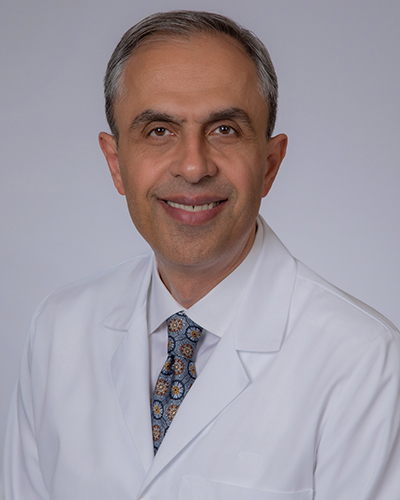
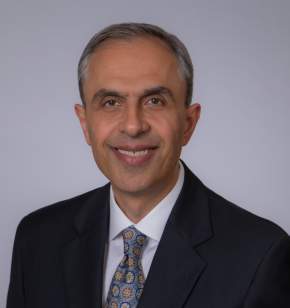
Cedars-Sinai provides advanced neurosurgical care for brain tumors, skull base disorders, and other complex neurological conditions. Aaron Cohen-Gadol, MD, a neurosurgeon affiliated with Cedars-Sinai, specializes in complex brain and skull base surgery, including meningioma surgery. For complex skull base meningiomas, surgical planning may require particular attention to nearby cranial nerves, major blood vessels, and other critical structures.
- Mayo Clinic (Rochester, MN) — Gelareh Zadeh, MD, PhD
Mayo Clinic provides multidisciplinary treatment for brain and skull base tumors, bringing together neurosurgery, neurology, oncology, neuroradiology, radiation oncology, and other specialties. Its integrated approach allows specialists to develop individualized treatment strategies for complex meningiomas.
- The Johns Hopkins Hospital (Baltimore, MD) — Chetan Bettegowda, MD, PhD
Johns Hopkins provides specialized care for brain tumors through comprehensive clinical and research programs. Its specialists treat meningiomas and other complex intracranial tumors using multidisciplinary approaches that may include surgery, radiation therapy, imaging, and ongoing monitoring.
- Massachusetts General Hospital (Boston, MA) — Bob S. Carter, MD, PhD
Massachusetts General Hospital provides specialized treatment for brain tumors and complex neurological conditions. Its programs combine neurosurgery, advanced imaging, radiation oncology, and neurological research to support individualized treatment planning.
- UCLA Health (Los Angeles, CA) — Linda M. Liau, MD, PhD, MBA
UCLA Health provides comprehensive brain tumor and neurosurgical care supported by multidisciplinary specialists and extensive research programs. Its neurosurgical teams treat a broad range of intracranial tumors and complex neurological conditions.
- Stanford Health Care (Palo Alto, CA) — Michael Lim, MD
Stanford provides specialized neurosurgical care for brain tumors, skull base tumors, pituitary conditions, and other neurological diseases. Its programs combine advanced surgical technologies, multidisciplinary treatment, clinical research, and access to specialized therapies.
These institutions provide extensive resources for patients with brain tumors and complex neurological conditions. However, institutional reputation alone does not determine which surgeon will perform a procedure or how much experience that surgeon has with the patient's particular type of meningioma.
Why should you have your surgery with Dr. Cohen?
Dr. Cohen
- 7,500+ specialized surgeries performed by your chosen surgeon
- More personalized care
- Extensive experience = higher success rate and quicker recovery times
Major Health Centers
- No control over choosing the surgeon caring for you
- One-size-fits-all care
- Less specialization
For more reasons, please click here.
What Hospital Rankings Don’t Tell You—The Hidden Reality
The first thing that rankings fail to capture is the difference between institutional excellence and individual surgical expertise.
A hospital might be ranked #1 in neurosurgery based on the collective performance of dozens, or even hundreds, of surgeons over many years. However, the outcome depends on the specific surgeon assigned to the case. A world-famous institution could still route a patient to a relatively junior attending physician with limited experience in treating their exact type of condition or disease.
This is an important point for anyone with a meningioma. These tumors vary dramatically in complexity. A straightforward convexity meningioma near the surface of the brain is fundamentally different from a petroclival or skull base meningioma that is wrapped around cranial nerves and major blood vessels. General rankings rarely consider such nuances.
A hospital can be exceptional at brain surgery in general while lacking true ultraspecialization in deep-seated skull base tumors.
Another reality that patients often discover too late is that major academic hospitals are teaching institutions. Residents and fellows are integral members of the surgical team. Their involvement is not inherently negative; many are highly skilled and closely supervised. However, patients are rarely given detailed transparency regarding who will actually perform each part of their surgery.
In some cases, a trainee might perform portions of the exposure, closure, and/or technically demanding components under supervision. Yet, many patients mistakenly assume that the renowned senior surgeon whose name appears on the website will personally perform every critical step.
This assumption is not always accurate.
The overall experience at large institutions can also feel surprisingly impersonal. High-volume centers frequently operate with an industrial rhythm. Patients could spend far more time interacting with nurse practitioners, physician assistants, coordinators, or scheduling staff than with the surgeon. Appointments can feel rushed, with only limited face-to-face time dedicated to discussing surgical strategy, risks, or alternatives.
For patients confronting a life-altering diagnosis, this fragmentation can create anxiety and confusion.
Also, there is the issue of timing. The most prestigious hospitals often have the longest waitlists. For a stable, slow-growing tumor, the wait might not pose a major problem. However, for patients experiencing worsening neurological deficits, seizures, brainstem compression, or progressive vision loss, waiting several months for a consultation at a famous institution can carry real consequences. Neurological deterioration is not always reversible.
In these situations, speed and direct access matter just as much as reputation.
How to Choose: A Framework for Patients
Patients evaluating meningioma treatment options should look beyond broad institutional branding and ask highly specific questions.
The first and most important question relates to surgical volume. Instead of asking how many meningiomas the hospital treats annually, patients should ask the surgeon directly, “How many tumors exactly like mine have you personally removed in the past year?”
This distinction matters. A surgeon who routinely performs skull base meningioma surgery develops pattern recognition, technical judgment, and complication-management instincts that cannot be replicated through general neurosurgical experience alone.
Patients should also ask direct questions about surgical participation, such as, “Will a resident or fellow perform any part of this surgery?” and “Will you personally be present for the entire procedure?”
These are reasonable questions, particularly for a complex brain surgery in which millimeter-scale accuracy can determine neurological outcome.
At the same time, there are situations for which a large academic institution offers advantages. Patients with a recurrent malignant meningioma might benefit from access to an investigational therapy or advanced radiation protocol. Likewise, medically fragile patients with significant cardiac, pulmonary, or systemic disease might need the depth of a major multispecialty hospital ecosystem.
One of the most valuable steps any patient can take is to obtain an independent second opinion, particularly from a surgeon outside the initial institutional network. A fresh review of imaging and treatment strategy can confirm the plan, identify overlooked risks, or present a less-invasive alternative.
Second opinions are not a sign of distrust; they are a form of due diligence.
Aaron Cohen-Gadol, MD and Complex Meningioma Surgery
Dr. Aaron Cohen-Gadol is a board-certified neurosurgeon affiliated with Cedars-Sinai Medical Center whose practice includes complex brain and skull base surgery, including meningiomas.
His experience includes the treatment of meningiomas in challenging locations where tumors may be closely associated with cranial nerves, major blood vessels, or other critical neurological structures. He is also the founder of The Neurosurgical Atlas, an educational platform focused on advanced neurosurgical techniques.
For patients evaluating meningioma surgery, the surgeon’s experience with the specific tumor location and surgical approach can be an important consideration alongside the hospital’s facilities and multidisciplinary resources.
Beyond the Brand
Hospital rankings remain useful tools. They can help patients identify institutions with strong infrastructure and research capabilities and an established reputation for quality care. However, rankings should never be used as the final decision-maker.
The most important question is not “What is the best hospital?” but “Who is the most experienced surgeon for my tumor?”
For a patient who needs to undergo meningioma surgery, the outcome is deeply personal. The best hospital is ultimately wherever the right surgeon is operating.
Getting There
The clinic is located at Cedars Towers East which is at 8631 W 3rd Street, Suite 815E, Los Angeles, CA 90048, near Beverly Grove. It’s easily accessible from San Vicente Boulevard or La Cienega Boulevard. Paid parking is available in the adjacent structure and limited street parking can be found nearby. For navigation, entering “8631 W 3rd St” into the GPS will direct you to the main entrance.
The entrance to the Cedars Towers East parking garage is on Sherbourne Drive, located just north of 3rd Street. It is a self-parking garage with the address 217 S Sherbourne Dr, Los Angeles, CA. The entrance is on the right if you are traveling south on Sherbourne, or on the left if you are traveling north on Sherbourne. You then need to take the parking elevators to the plaza level and then cross the short bridge to use the East elevators to reach the 8th floor (suite 815.) Allow extra time for traffic and parking, especially during weekday mornings.