Radiation Therapy for Hemangioblastoma

Hemangioblastomas are a rare tumor that forms in the blood vessels of the brain or spine. They are usually benign, meaning they are unlikely to spread to the rest of the body.
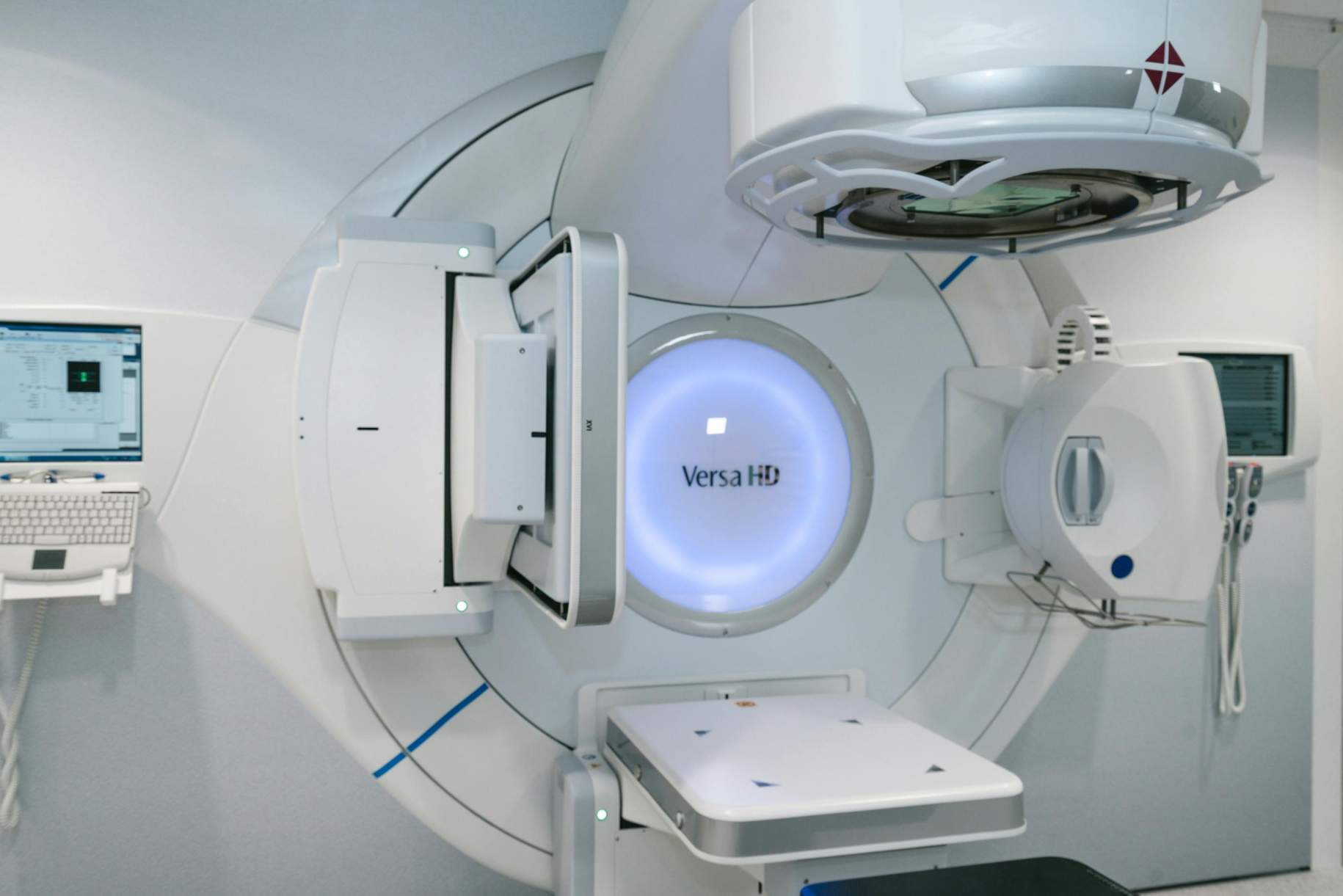
While surgery is often the first-line treatment, radiation therapy is a valuable non-invasive option. Radiation therapy is often utilized for tumors that are in surgically difficult locations, or for patients with multiple tumors, such as those with von Hippel-Lindau (VHL) disease.
Radiation Therapy for Hemangioblastoma
Hemangioblastomas are often treated with surgery, especially when symptomatic or accessible. However, radiation therapy is an alternative or adjunctive treatment modality, particularly for lesions that are difficult to resect or in patients who are not good surgical candidates.
Here are three common forms of radiation therapy used for hemangioblastomas:
Stereotactic Radiosurgery (SRS)
SRS is a non-invasive treatment that uses highly focused radiation to target tumors with great precision. It requires fewer, higher-dose treatments compared to traditional radiation therapy. Common systems used for SRS include Gamma Knife, Linear Accelerator (LINAC), and CyberKnife.
This method is especially useful for treating small to medium-sized hemangioblastomas in the brain and spinal cord, particularly when surgery may be too risky.
Why should you have your surgery with Dr. Cohen?
Dr. Cohen
- 7,500+ specialized surgeries performed by your chosen surgeon
- More personalized care
- Extensive experience = higher success rate and quicker recovery times
Major Health Centers
- No control over choosing the surgeon caring for you
- One-size-fits-all care
- Less specialization
For more reasons, please click here.
Fractionated Stereotactic Radiotherapy (FSRT)
FSRT is similar to SRS in its accuracy but spreads the total radiation dose over several smaller treatments. These treatments are typically given once a day over a few weeks.
This careful approach helps protect healthy tissue around the tumor, making it a good choice for larger tumors or those located near sensitive areas.
Proton Beam Therapy (PBT)
Proton therapy is a specialized form of radiation that uses protons instead of traditional X-rays. A key benefit is that protons release most of their energy directly at the tumor, minimizing damage to nearby healthy tissue.
This precision is particularly helpful when treating tumors in the brain and spinal cord, where protecting surrounding areas is crucial.
Radiation Dose for Hemangioblastoma
Radiation dosage is measured in “grays”, abbreviated as “Gy”. Dosing and frequency of treatment depend on your specific situation and the type of radiation technique used. Your radiation oncologist will carefully calculate the optimal dose to maximize treatment effectiveness while minimizing side effects. Here is what you can expect for each technique:
- SRS is a one-time dose ranging from 15 to 30 Gy. The treatment may range from under an hour to a few hours in duration.
- FSRT is divided into smaller doses, called “fractions”. This means that you may only receive 1 to 5 Gy doses of radiation during each session, and you will have multiple sessions over several weeks. Each session can range from under an hour to four hours in duration.
- PBT is also divided into smaller doses. The total dose of radiation that you receive over the course of treatment may be greater than the typical dose for FSRT because PBT is used to treat larger or multiple tumors. Each treatment session typically takes between 15 to 30 minutes.
Side Effects of Radiation for Hemangioblastomas
Radiation therapy for hemangioblastomas is usually well-tolerated, but like any medical treatment, it carries some risk. Here are some of the side effects you may experience:
- Fatigue
- Skin irritation at the treatment site
- Hair loss
- Headaches
- Nausea & vomiting
Most side effects are temporary and resolve after the completion of therapy. Your medical team will help you to monitor and manage any side effects.
Risks of Radiation Therapy
While radiation therapy is generally safe, there are inherent risks in pursuing this form of treatment. Risks can include:
- Cognitive Changes—Your ability to think clearly, and perform executive functions like paying bills, remembering important dates, or operating a motor vehicle may be affected.
- Radiation necrosis—A rare condition where irradiated brain tissue becomes damaged and dies.
- Secondary Tumor—A different form of tumor may develop in the area of radiation treatment, as a direct result of being irradiated. The risk of secondary tumors is very low, and the benefits of treatment typically outweigh this risk.
It's important to note that not everybody will experience these side effects, and for those who do, the severity can vary. Modern radiation therapy techniques such as intensity-modulated radiation therapy (IMRT) aim to minimize exposure to healthy tissue and thereby reduce the risk of side effects.
Your care team will closely monitor you for both acute and long-term effects, and supportive care is provided to manage any symptoms that arise.
Does Everyone Receive Radiation Therapy for Hemangioblastoma?
Not everyone with a hemangioblastoma will need radiation therapy. The decision is based on factors such as the tumor's size, location, your overall health, and whether the tumor is part of VHL disease.
In cases where surgery is not feasible or you have multiple tumors, radiation therapy may be the preferred treatment. For small, asymptomatic tumors, your doctor may recommend a ‘watch-and-wait’ approach called observation with regular MRI scans to monitor for changes.
Is Radiation Curative for Hemangioblastoma?
Although radiation therapy is not typically seen as curative for hemangioblastomas, it can be very effective in controlling tumor growth and preventing further progression. In some cases, radiation therapy can provide long-term control of the tumor.
Even when treatment is successful, there is still a possibility that hemangioblastomas can recur or grow back following treatment. It is important to follow-up regularly with your doctor to monitor for any recurrence.
Patients with VHL disease are at higher risk for developing new hemangioblastomas over time, as the disease predisposes them to multiple tumors throughout the central nervous system.
If hemangioblastomas recur after radiation therapy, additional treatment options may be considered, such as repeat radiation therapy, surgical resection, or other therapeutic interventions based on the specific case.
Key Takeaways
- Radiation therapy is a valuable treatment for hemangioblastomas, particularly when surgery is not an option.
- Treatment plans are personalized, with SRS often involving fewer high-dose sessions compared to FSRT and EBRT.
- Side effects are usually manageable and temporary, but it’s important to be aware of the potential for long-term effects.
- Not all patients with hemangioblastoma will undergo radiation therapy; the treatment decision is made on a case-by-case basis.
- It is important to discuss the potential benefits and risks of radiation therapy with your medical team so that you can make an informed decision about your treatment plan.